Appliance Repair Staten Island · Practical repair guide
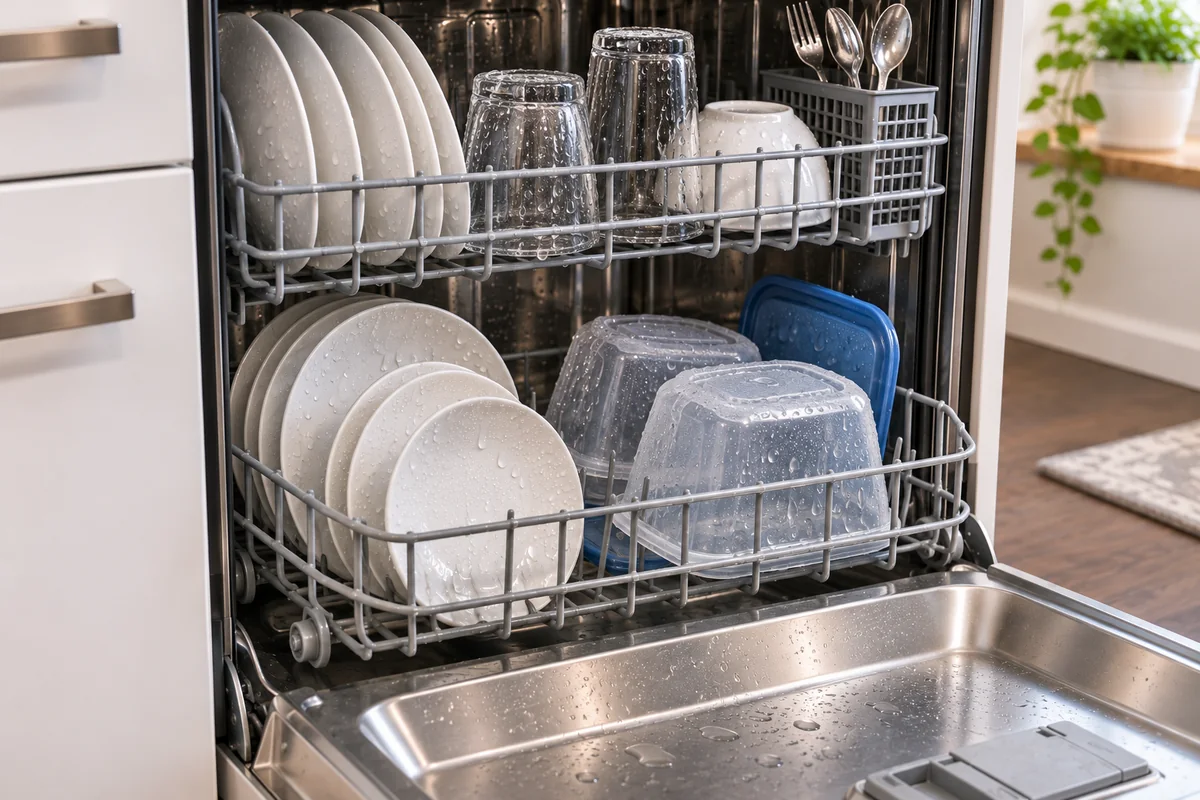
You open the dishwasher after a completed cycle. The ceramic plates look clean and dry, the glasses are mostly clear, but the plastic storage containers are still covered in droplets. That is a familiar result in many dishwashers. Now imagine the same load with water spread across the plates, glasses and metal utensils, every time, even though the machine used to dry them well. The change matters more than the mere presence of a few drops.
If the drying results have changed substantially on the same program with comparable loads, dishwasher repair in Staten Island can help distinguish operating conditions from a heating, drying or control fault. Start by checking the type of drying your machine is designed to provide.
Why plastic can be wet when other dishes are dry
Different dishwashers dry in different ways. Some use a dedicated heated-dry arrangement; others rely primarily on heat retained by the dishes and condensation inside the tub. Depending on the model, a fan, vent, automatic door-opening feature or another drying technology may assist the process. An exposed heating element is not a feature of every dishwasher.
Plastic behaves differently from ceramic and glass. It generally does not retain as much useful heat after washing, so droplets may remain even when other dishes dry satisfactorily. Water can also collect inside recessed cup bases and the raised edges of plastic containers. A completely dry load is a different expectation from dry plates with a few remaining drops on plastic.
| What remains wet | What to consider |
|---|---|
| Mainly plastic items | Material characteristics, drying method and loading |
| Water pooled on concave bases or lids | Item orientation and trapped water |
| Droplets on the tub walls | Condensation may be part of the designed drying process |
| Glass, ceramic and metal repeatedly remain wet | Program and drying settings, rinse aid, heating or drying-system performance |
| Drying and cleaning both deteriorated | A wider wash or heating problem may need investigation |
Refer to the manufacturer’s description of your model. A particular drying result is not a universal test of whether every dishwasher is operating correctly.
Look for a change in the program or loading
A short or energy-saving program may use different drying conditions from a program selected for a full household load. Some models offer a heated-dry, extra-dry or comparable option, and the feature names and available combinations vary. Check the manual rather than assuming every dishwasher has the same setting.
Rinse aid helps water run off dishes rather than remaining in droplets. Confirm whether the model uses a rinse-aid dispenser, whether it needs replenishing and which adjustment the manufacturer recommends. Simply adding more detergent will not provide the same effect.
Look at the load itself. Can water run off the surfaces, or do upturned bases and container edges hold little pools? Arrange items in the recommended position so that they do not shield one another. When unloading a finished load, avoid spilling collected water from upper-rack items over lower-rack dishes that have already dried.
These are practical explanations for an uneven result. They are less persuasive when glassware, plates and utensils have all become consistently wet despite no meaningful change in the normal program, loading or maintenance.
When a heating or drying fault becomes more likely
Heating during washing and rinsing can contribute to the subsequent drying process, while some models have a separate mechanism that assists drying. A problem with an applicable heater, temperature sensor, fan, vent or control can therefore change the result. The arrangement must be checked against the actual model rather than assumed from a generic list of parts.
Consider whether something else changed too. If greasy residue now remains on both racks, the dishwasher not cleaning dishes guide explains how water supply, circulation and heating can affect the wash. If cleaning remains normal but the drying result is suddenly different, the technician may need to focus more closely on the selected drying stage and the model’s drying components.
Do not touch an exposed heater, open a service panel, bypass a door switch or attempt a voltage test. If there is a burning smell, visible electrical damage, a tripping breaker or a leak, stop using the machine. A displayed fault code is worth recording precisely, not repeatedly clearing so that the appliance can continue to operate.
Describe what changed
Before arranging a repair visit, note which materials remain wet, whether the cycle finishes, the program and drying option used, and whether you have also seen changes in cleaning. Share the full model number and any displayed error code. These details are much more informative than the general statement that the dishwasher is not drying.
Some owners expect their dishwasher to leave every plastic container perfectly dry; others have lived with the same machine for years and notice immediately when its performance changes. The second observation can be particularly useful during diagnosis. Compare the appliance with its own normal behavior before concluding that it needs a new heating element.
Call 646-204-3526 to discuss service availability in Staten Island. The diagnosis and repair price are explained before approved repair work begins.