Appliance Repair Staten Island · Practical repair guide
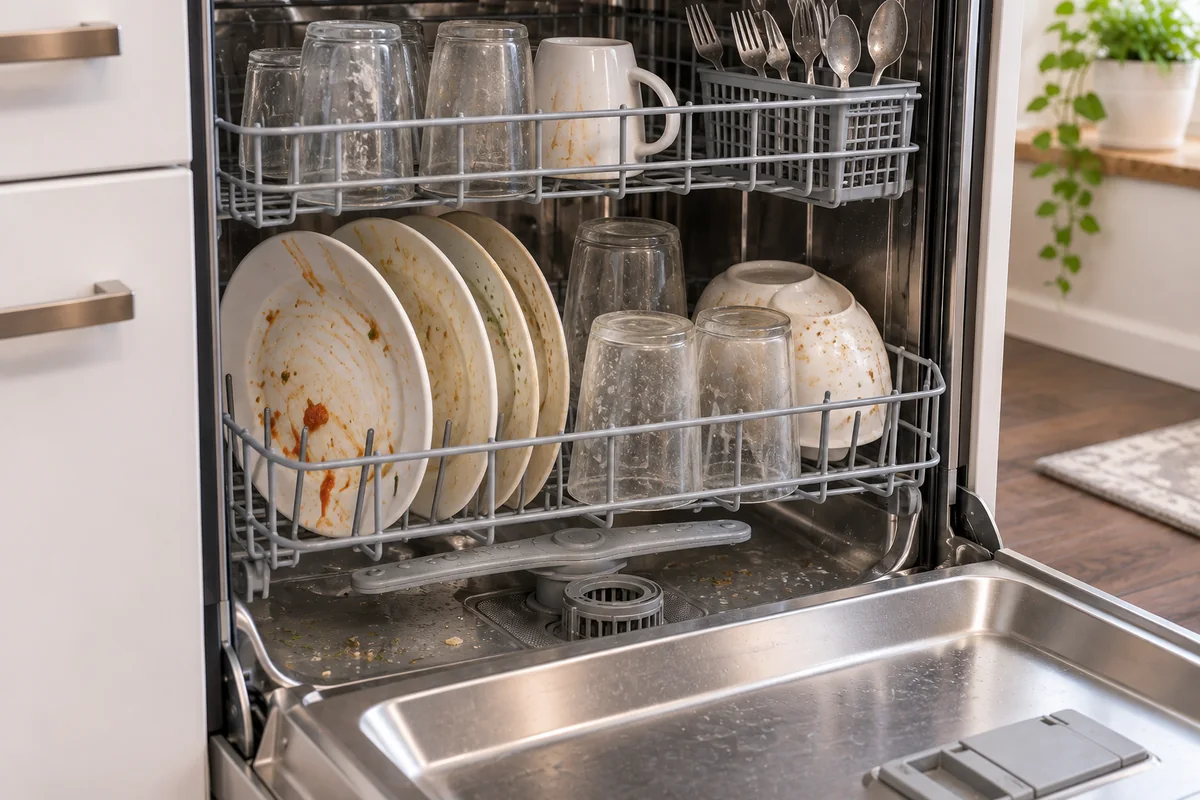
A few dirty plates in the lower rack, a whole load coated in gritty residue and a set of glasses that comes out cloudy are three different complaints. Before buying a stronger detergent or assuming the dishwasher needs a new pump, look at what the machine actually left behind. The distribution of the problem can reveal more than the fact that the dishes are still dirty.
If cleaning performance has deteriorated across several normal loads despite appropriate loading and filter care, our dishwasher repair service in Staten Island can investigate the appliance’s water supply, circulation and heating systems. Establishing which part of the wash process is failing is more useful than replacing a component based on the appearance of a single plate.
Start with the residue, not the replacement parts
Unload a completed cycle and look at the affected items. Are the same dishes repeatedly dirty? Is the residue loose, stuck to the surface or mainly visible on glassware? These distinctions can help direct the next check.
| What the dishes look like | What to investigate first |
|---|---|
| Food remains on a few crowded or shielded items | Loading position, spray coverage and the selected program |
| One rack consistently washes worse than the other | Obstructed spray movement, water delivery to that rack or circulation problems |
| Loose particles or gritty deposits on many items | Filter condition, detergent residue, food particles and draining |
| White film or water spots on glasses | Water hardness, detergent and rinse-aid settings |
| Greasy residue across both racks after a normal load | Wash conditions, detergent, fill, circulation and heating |
These patterns do not identify a failed part. They do suggest a sensible order in which to investigate the problem. A cloudy glass, for example, may have a surface deposit rather than food that has survived the wash.
One rack is dirty, the other is clean
A dishwasher depends on water reaching the surfaces that need washing. A tall utensil can interfere with a spray arm, a large pan can shield the items behind it and closely nested bowls can prevent water from circulating freely between their surfaces. Changing the arrangement may improve cleaning without changing any component.
Once the cycle has stopped and the appliance has cooled, check the manufacturer’s loading instructions. Observe whether a protruding handle or utensil interferes with the movement of an accessible spray arm. If the manual permits it, check the arm’s free movement with the machine off. Do not force it or remove parts that are not intended for routine owner maintenance.
The useful comparison is between normal loads. If the upper rack remains consistently dirty after the arrangement changes, while the lower rack is clean, that is worth reporting. Depending on the model, the technician may need to investigate the upper spray path, an internal water-delivery connection or the wash system itself. The same conclusion would not necessarily follow if both racks were equally affected.
Grit, detergent and the filter
Water carries loosened food away from the dishes and through the dishwasher’s circulation and filtration system. A filter that is heavily soiled, incorrectly seated or damaged can contribute to poor wash results. On models with owner-removable filters, follow the cleaning and reinstallation procedure for the specific machine. Some designs use a different filtration arrangement, so an instruction for another model may not apply.
Check the detergent dispenser after the cycle. A tall dish or utensil placed in its path can prevent the cover from opening normally. Detergent type, dosage, storage conditions and water hardness also affect results. Use detergent intended for automatic dishwashers and the settings recommended for your model. Ordinary hand dishwashing liquid creates excessive foam and is not a substitute.
There is another clue worth checking: does excess dirty water remain in the bottom of the machine after the program finishes? If it does, read our guide to a dishwasher that is not draining. Wash and drain complaints can overlap, but increasing the detergent dose will not correct an obstructed drain path.
Why a dishwasher can run and still wash badly
The control panel may look normal while the wash conditions inside the appliance are not. Three systems deserve particular attention when basic loading, detergent and maintenance checks no longer explain the results.
Water supply. A dishwasher needs an appropriate supply of water before it can circulate it. If the fill is inadequate, the spray system may not work as intended. The correct amount of water and the way it is measured vary by model. There is no universal visible water level to compare against a photograph from another dishwasher. If the machine appears to start without taking in water, our dishwasher fill-problem guide explains which observations are useful before a repair visit.
Circulation. The wash system moves water through the spray paths. An obstruction, a failing circulation component or another model-specific fault can reduce coverage. Hearing the machine run does not establish that sufficient water is reaching the dishes.
Heat. The wash program, supply conditions and the machine’s own heating arrangement influence how well it removes grease and detergent residue. If cleaning has become poor and the drying results have changed at the same time, record both symptoms. Our guide to dishwasher drying problems explains how drying settings and heating faults can produce different results.
These systems interact. A heating fault is only one possible explanation for greasy dishes, and a circulation fault is not the only explanation for poor spray coverage. A professional diagnosis needs to distinguish them rather than treating all dirty-dish complaints alike.
Before arranging a visit
Note whether the failure affects one rack or both, what residue remains, whether the selected cycle finishes and whether the dishwasher has recently been installed or moved. Include the full model number if it is safely accessible and the exact wording of any error code. A photograph of the affected load can help explain the complaint.
Do not dismantle a pump, test electrical connections or operate a dishwasher with a leak, a burning smell or a tripping breaker. A repeated poor wash after reasonable owner maintenance calls for diagnosis, not a succession of guesses at replacement parts.
Call 646-204-3526 to discuss appointment availability in Staten Island. The diagnosis and repair price are explained before approved repair work begins.