Appliance Repair Staten Island · Practical repair guide
A new sound is a clue, not a part number. A squeak, metallic scrape, rattle and rhythmic thump can involve different causes. Describe the timing and operating conditions before assuming every noisy dryer needs the same belt or bearing.
Which sound are you hearing?
| Sound or pattern | Possible area to investigate | What to record |
|---|---|---|
| Squeaking or squealing | Drum supports, belt-drive components or contact between moving parts | Whether it starts immediately or after warming; where it seems loudest |
| Metal scraping or grinding | Contact or wear in a moving assembly | Stop use; report when it began and any damage to clothing |
| Rattle or clatter | Loose visible objects, load hardware or an internal loose component | Whether it follows the laundry load or remains after removing loose items |
| Repeated thump | Tangled/bulky load, installation or drum-support condition | Whether the rhythm changes with the load |
| Hum or buzz with no rotation | A separate starting or drive complaint | Whether the drum actually turns, not just whether controls illuminate |
Several components can transmit sound through the cabinet. Even a clear recording does not reliably identify one failed part. It helps choose what to inspect.
Look for external causes while the dryer is stopped
Check pockets and remove objects visible in the drum without disassembly. Clothing hardware can make an intermittent clatter; a large sheet wrapped into a ball can produce a repeated thump.
Look for items resting on the dryer or touching its side. Notice whether the cabinet rocks or an adjacent appliance contacts it. Do not move a stacked unit or pull a dryer away from a gas line to investigate a noise.
Describe what you find rather than forcing the machine to keep running. Some designs can make a brief light thump after a long period of non-use, but that does not make persistent grinding or a worsening sound normal.
Timing makes the service description more useful
Useful observations include the first moment the sound appeared, whether it follows drum rotation, and whether the dryer stopped or continued. Report a recent installation or move, a trapped object and any change in drying performance.
A short recording made from outside the cabinet can help if the machine is already operating normally enough to observe safely. Do not restart a dryer with scraping, smoke, burning odor or severe shaking simply to make a better video. A written description is enough to book diagnosis.
What professional diagnosis adds
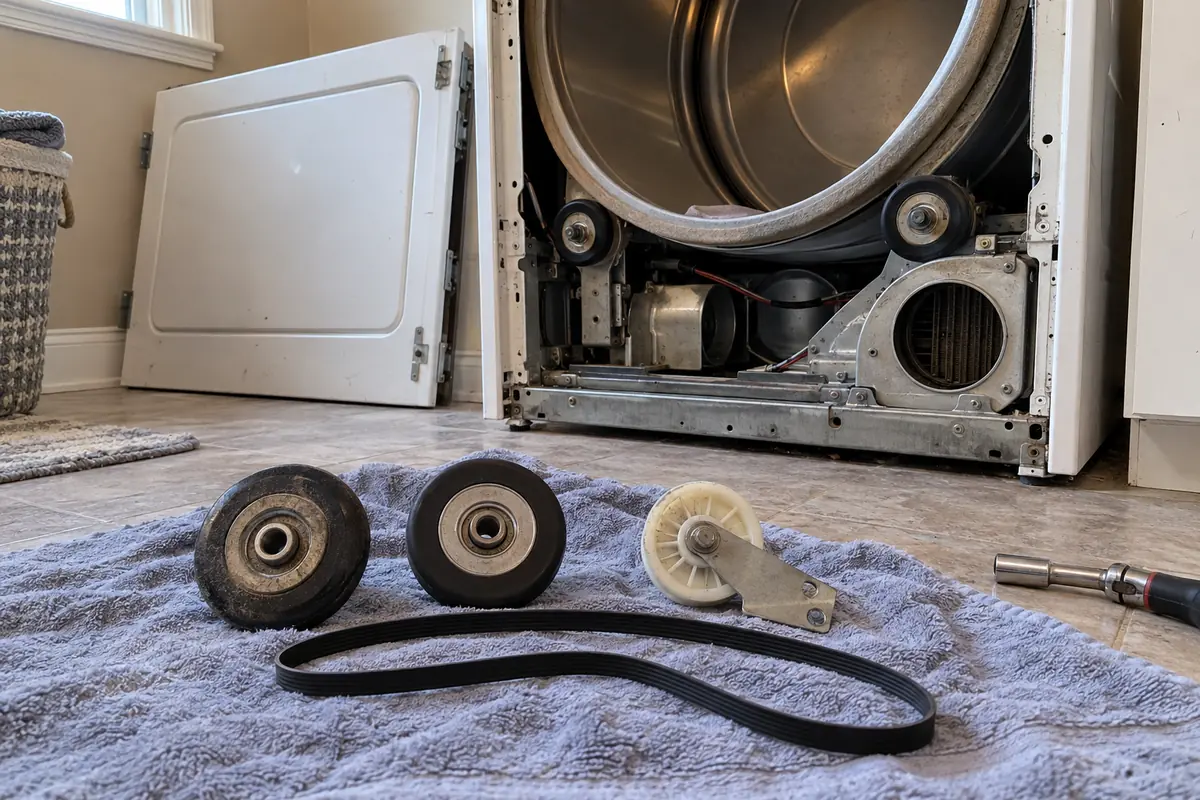
The inspection follows the model’s drum support, drive and airflow design. The technician can check the relevant moving assemblies and signs of contact or wear with the machine safely accessed. Some dryers use different support arrangements, so a generic online parts list may be wrong for your model.
Discuss the confirmed failed component and the condition of related parts before approving the repair. Replacing a belt alone may not address a noise caused elsewhere; replacing several parts together also needs a reason beyond the sound.
If the dryer makes a motor-like sound but does not tumble, read the drum-not-turning guide and report both symptoms.
Can you keep using it?
A removed loose object or ordinary load noise is different from continuing to run a dryer that grinds, scrapes or gets progressively louder. Stop use for those symptoms, especially with heat, smell or vibration changes, and arrange inspection.
For dryer repair in Staten Island, send the model number, noise description and when it happens. That gives the appointment a clear starting point without pretending a phone recording is a final diagnosis.
Manufacturer references
These references explain general operating checks. Use the instructions for your exact model; a guide cannot identify a failed part remotely.