Appliance Repair Staten Island · Practical repair guide
A dryer needs heat, moving air and room for laundry to tumble. Warm but damp clothes can point to restricted airflow, an unsuitable load or a control issue. Clothes that stay cold need a different investigation. The aim is to identify what changed before treating every slow cycle as a vent clog.
Start with the pattern, not a drying-time rule
| What you notice | What to consider | Useful information for service |
|---|---|---|
| Clothes remain cold | Selected cycle, supply and heat production | Cycle name, dryer type and whether any heat develops |
| Clothes are warm but still damp | Moisture removal, load and airflow | What was in the load; whether an airflow warning appeared |
| A sensor cycle ends early | Cycle selection, load and moisture sensing | Whether the issue affects one setting or several |
| A new dryer is also slow | Installation and the existing exhaust path | When it was installed and whether the old dryer had the same symptom |
| Cabinet is unusually hot or there is a burning odor | Possible unsafe condition | Stop use; report the symptom before another cycle |
There is no single normal duration for every dryer and load. Towels, small mixed loads, cycle settings and ventless designs differ. Compare the same ordinary load with the dryer’s previous performance rather than relying on a universal minute count.
Rule out the simple load and maintenance issues
Clean the lint screen before a load, following the manufacturer’s directions. If the mesh has residue that ordinary lint removal does not clear, use the approved cleaning method and let the screen dry completely before reinstalling it.
Give clothing space to tumble. A tightly packed load or a large tangled sheet can dry unevenly. Note whether the clothes were already unusually wet when they came out of the washer; the dryer may be receiving a different starting load.
Check the selected heat and dryness settings. An air-only cycle does not add heat, and an energy-saving option can change cycle duration. For a ventless model, follow its filter and maintenance instructions rather than looking for an outdoor exhaust that it does not have.
What an airflow problem can look like
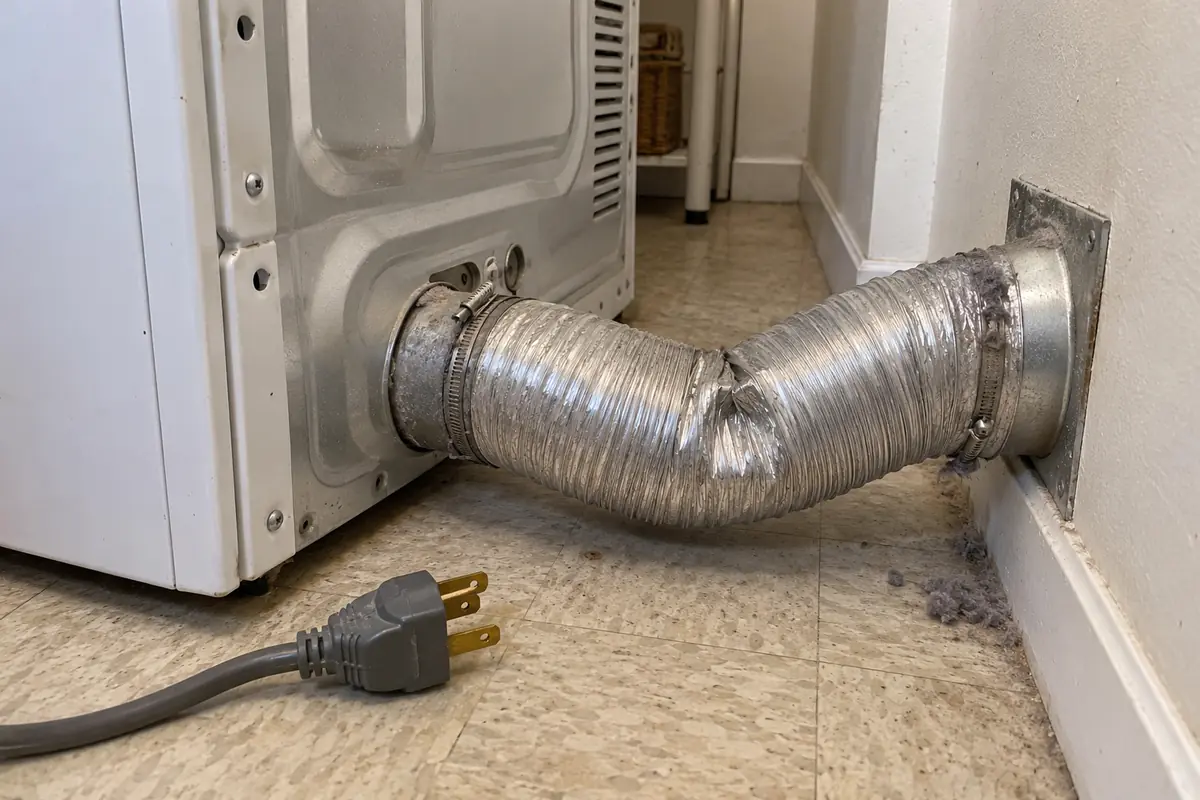
On a vented dryer, the air path includes the machine, its connection and the building’s exhaust route. A visible crushed transition duct, an exterior hood that appears blocked, or a model-specific airflow warning is worth reporting. A restriction out of sight can exist even when the visible section looks clear.
Only observe areas that are safely accessible. Do not pull out a heavy connected dryer or climb to a roof termination just to check it. Avoid running a disconnected gas dryer indoors as a test. Use the installation instructions for permitted duct materials and route limits rather than applying one length limit to every model.
Dryer repair and building duct work are separate tasks
A dryer fault and a duct restriction can produce overlapping symptoms. The appointment should establish whether the problem is heat production, internal airflow, the connection or the building route. Confirm the scope before approving work.
Our dryer service page explains appliance diagnosis and checks at the vent connection. Cleaning a long concealed duct, repairing a shared exhaust system or accessing a roof may require a separate vent specialist or building management. Do not assume those tasks are included in an appliance repair visit.
What to send when extra cycles keep returning
Send the full model number, gas/electric/ventless type, cycle, usual load and any warning code. Mention a recent installation, a moved dryer or work on the vent. If safely visible, a photo of the connection helps describe the setup.
If the clothes stay cold, use the no-heat guide. If you are weighing a new dryer, establish the vent condition first: a replacement connected to the same restricted route may have the same complaint.
Manufacturer references
These references explain general operating checks. Use the instructions for your exact model; a guide cannot identify a failed part remotely.